Catharsis: Thoughts on Writing
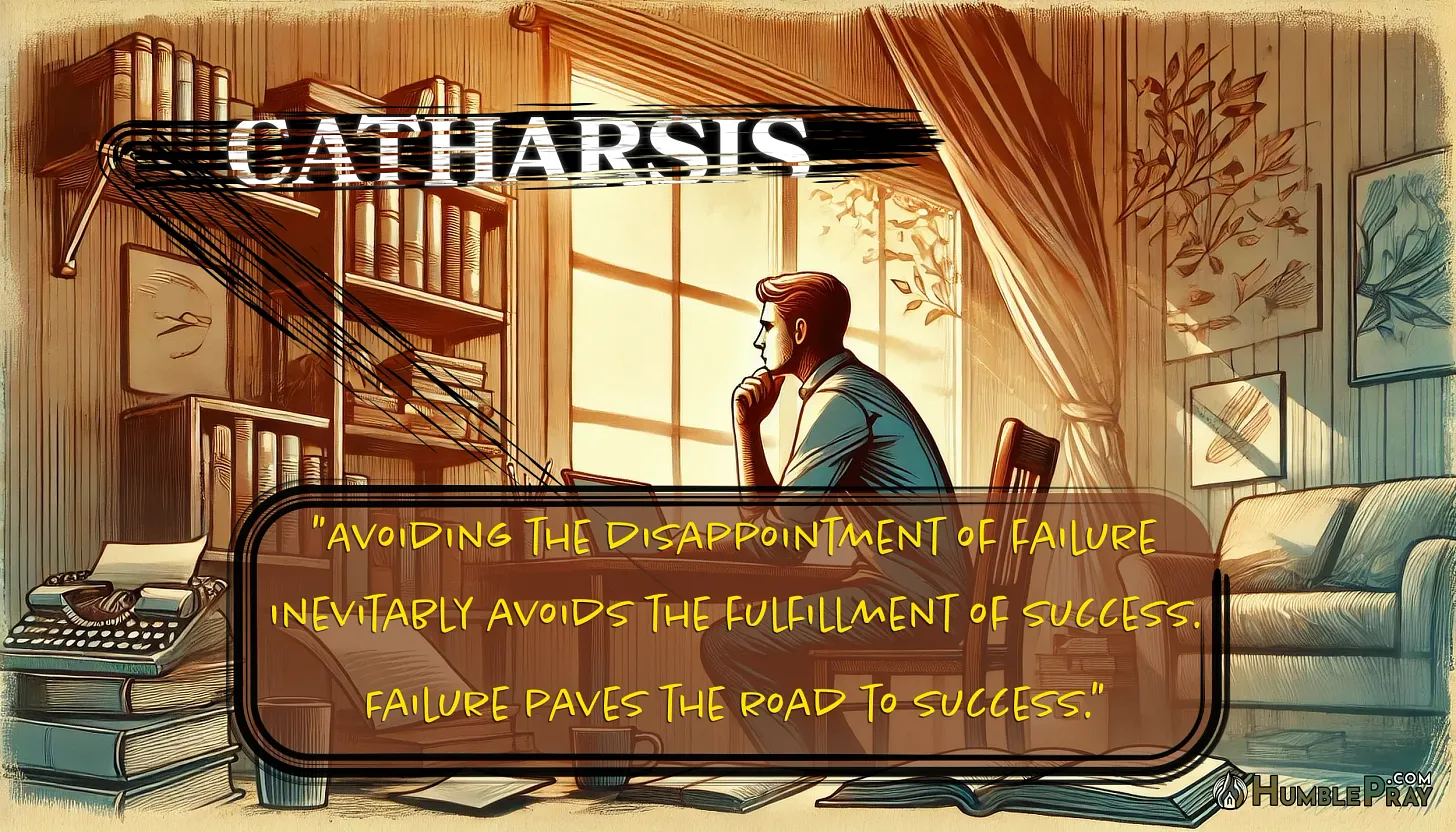
Avoiding the disappointment of failure inevitably avoids the fulfillment of success. Failure paves the road to success.
About a year ago, I wrote the first installment of what was supposed to be a series on the Doctrine of the Holy Trinity. While working on the second, I found myself debating a Unitarian (someone who rejects the Trinity). I linked him to my article, Essential Trinity: Identity of God. To my surprise, he read it and replied, “He doesn’t actually do what he says he’s going to do — prove the Trinity from Scripture.”
Wait, what?
That took me aback. Of course I did, didn’t I? I reread my article and was shocked to discover that while I addressed many heresies related to the Godhead, I hadn’t done the one thing I set out to do. What should have been a simple reminder to stay on point, revise the introduction, or reassess my goals instead felt like a devastating blow. To be fair, it was just the proverbial final straw that broke my less-than-proverbial back. I’ve barely written since.
Perfectionist
I’m my own worst critic. As a perfectionist, I hold myself to an incredibly high standard, often creating unreasonable or even unattainable goals. When I predictably fail to meet those goals, I’m hard on myself. Over the past year, I’ve written dozens of articles—dozens upon dozens in various stages—totaling over 100,000 words. Yet, most remain unseen because I don’t feel they’re “ready,” and I’d rather avoid the disappointment of putting out work that feels less than professional.
Amateur
Though I’ve never been a full-time writer, I’ve done some freelance work and had articles published in newspapers. I majored in communication with a minor in journalism. I didn’t pursue journalism because, while I loved it, I wasn’t willing to move across the country to scrape by financially. I also didn’t want to deal with the anti-Christian bias that permeates traditional media. So, while I have training, I’m not a “professional,” yet I still hold myself to a nebulous and unrealistic standard, which has led to producing very little.
Motivations
I love to write, but I’ve never been able to do it just for its own sake. I need readers, feedback, and engagement. When my writing doesn’t achieve that, it feels like I’ve failed. What did I do wrong? How could it have been better? Eventually, it became easier to just not write at all. After all, if I don’t write, I can’t fail, right? But chasing validation is exhausting and makes it hard to truly excel at anything. I’m sure my writing has suffered as a result.
No Nothing
The problem with giving up to avoid disappointment is you also avoid success and fulfillment when you succeed. Avoiding the disappointment of failure inevitably avoids the fulfillment of success. Failure paves the road to success. While I’ve written a lot of crumby articles, there are a few I believe are truly exceptional, like The Authority of King Jesus and Embrace Immediate Abolition of Abortion. As the saying goes, you miss 100 percent of the swings you don’t take. And you don’t master something without first failing. These clichés exist for a reason—they’re true.
Conclusion
If you’ve made it this far, thank you for sticking with me. This piece was an exercise to help me get back into writing, a bit of catharsis. I’m not going to commit to any particular article as the next project to come out, but I am actively writing an article on the Trinity (which spurred this article), and another on the Christian Identity movement. We’ll see which one crosses the finish line first.
Avoiding the disappointment of failure inevitably avoids the fulfillment of success. Failure paves the road to success.
Soli Dei Gloria.
Liked what you read? Subscribe for free.
Never miss out — Be notified of my latest articles!