Ending a Conversation and Masking
True story. I don’t know how to end a conversation. When I was a teenager, this was the most terrifying part of a conversation for me. I still cringe thinking about it. I’m sure there is also one particular girl from high school who also still cringes thinking about it. The awkwardness when it felt like the conversation was ending or over but I had no idea how to “end” it would petrify me, and led me to not engage people.
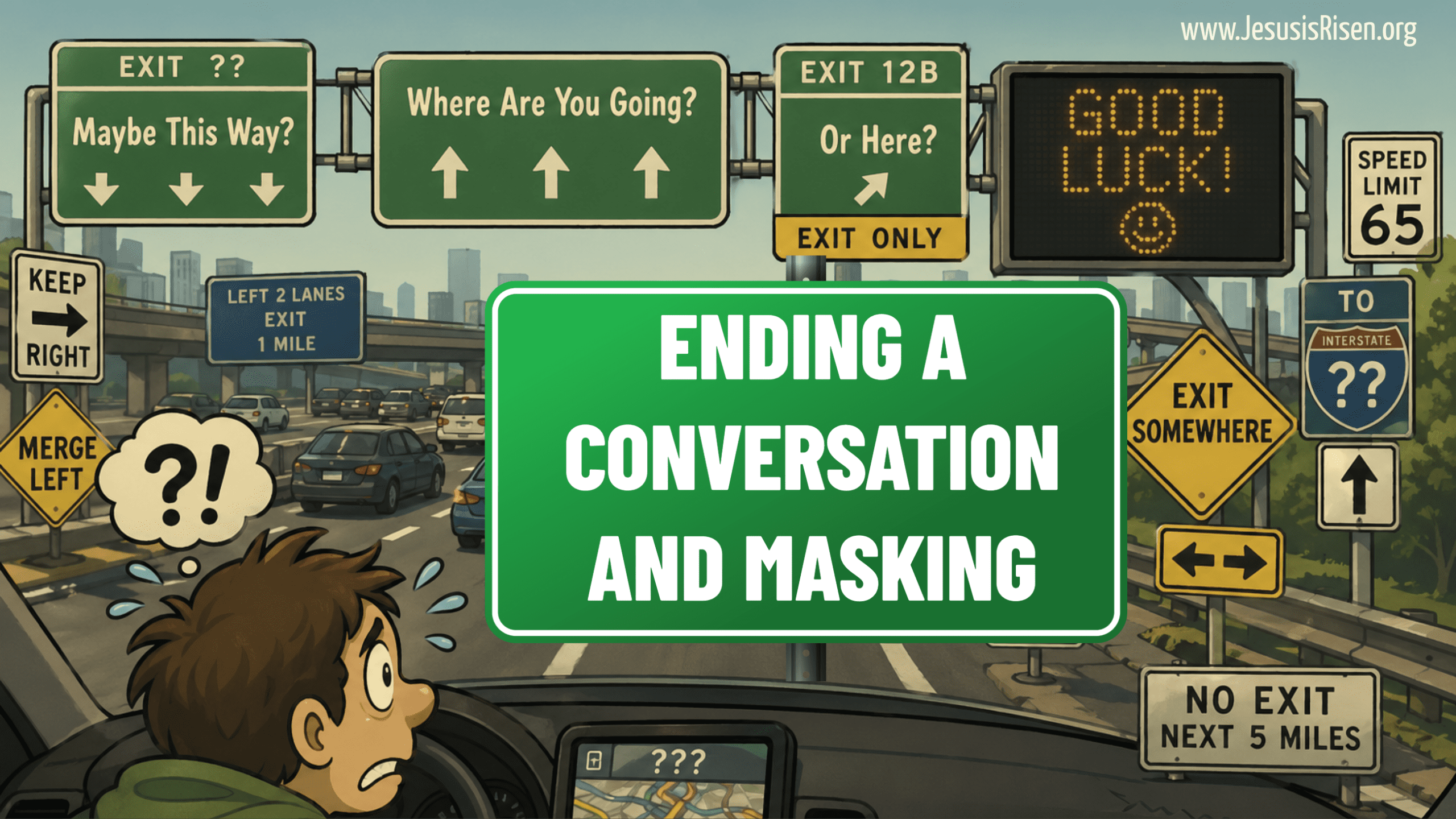
I had to teach myself “tricks” to end conversations. I still use these tricks today. If I’ve ever spoken to you in person, I’ve used one of these “tricks”. Essentially, scripts, to help me figure out the path out of the conversation when I think it’s over.
You’d think, man, Matthew, can’t you just figure out how to naturally end a conversation? Why do you have to think about it?
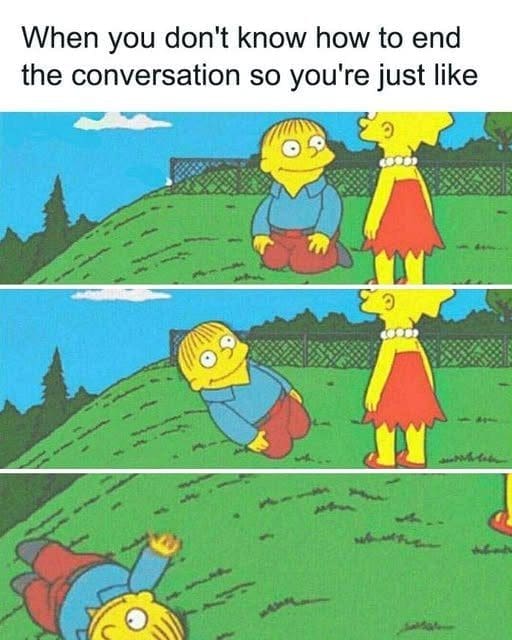
The answer is, “No, I can’t naturally figure it out.” That’s a part of being autistic. Part of the social part of my brain does not function like it does in a typical person. For all of my intelligence, wit, and humor, I cannot figure out how the majority of conversations are supposed to end. I’m almost 40 years old, I managed a retail store for 3 years. Still, the only way I’ve managed social situations is by “masking.”
Masking is what some people who have autism learn to do to survive in a world they don’t understand. I don’t know how to end conversations, so I mask it by creating little scripts in my head. When I don’t know how a conversation should end, I shortcut to possible outs, and test them to see. I’ve learned many of these shortcuts, these scripts, and constantly run them in any kind of social engagement.
Sound exhausting? It is. It’s very exhausting. I have to carefully plan my life around it, because of how exhausting it is. And, when I finally have people who I no longer feel like I have to mask in front of, who I can just be myself around? Those are people I love to be around. There aren’t many.
I do not intuitively and naturally understand certain social cues. That doesn’t mean I don’t understand all social cues. By all accounts, I “read people” very well under many circumstances. In fact, my constant need to “test” scripts means I tend to pick up on things most non-autistic people never do. So, it’s a really bizarre situation. I also have very high emotional intelligence, part of what helped me blend in and evade diagnosis for most of my life.
“You don’t look autistic.”
Yeah, that’s the point.
Liked what you read? Subscribe for free.
Never miss out — Be notified of my latest articles!