Losing A Lifetime of Work

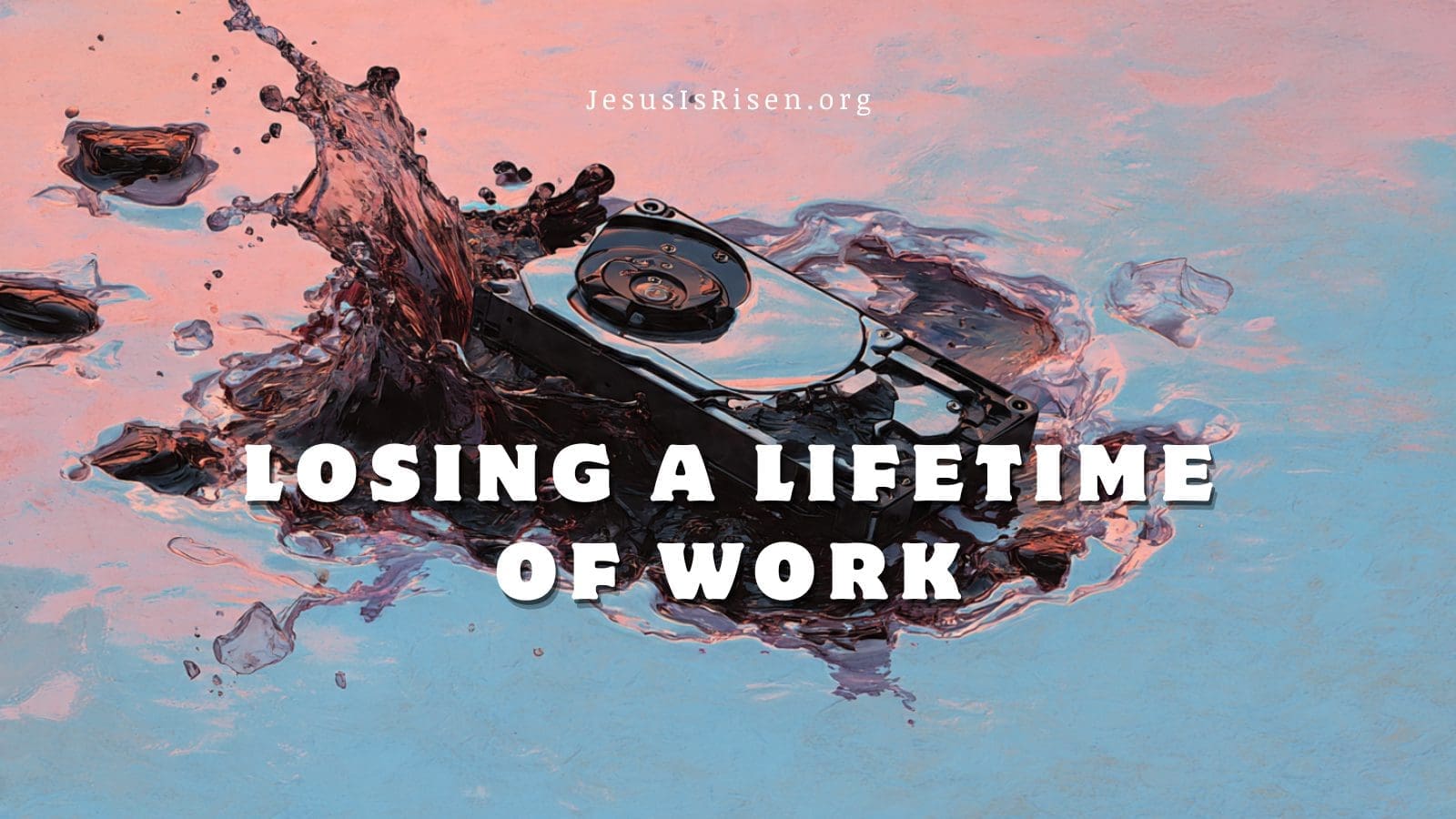
About 8 months ago I switched to Linux from Windows 10. Shortly thereafter, the hard drive that contained practically all of my photos, graphics, and other pictures — nearly two decades and 100 GB — stopped responding.

Initially, I thought accessing the Windows drive from Linux messed it up. In fact, up until about a week ago, I thought that was still the case. Content my files were still safe, I didn’t rush to recover them, though it had become very inconvenient. AuDHD does what AuDHD does.

The problem wasn’t Linux or Windows. The problem was the drive had catastrophically failed at the hardware level. Unlike software and other write errors, a hardware failure is a physical failure of the drive. No amount of software is going to allow access to the information on the drive. To recover the data, the drive needs to be physically opened up and the offending parts of its hardware (i.e., circuit controllers) replaced.

This is not cheap.

Any data security specialist will tell you, you should have your important data backed up in three different locations. I had previously backed up this data on Proton Drive. For no rational reason I can recall, I had deleted my backup. I had the data backed up on our local cloud drive, I had deleted the backup.

Looking back on it, the only explanation I can give at this point is that I was in the midst of grieving the loss of my grandmother who had just passed and that, combined with my other challenges, resulted in a really poor reasoning decision at the time to remove backups.

I had scoured every inch of my storage to see if I could find a backup of the data, before finally deciding to look into a quote for professional data restoration — and I knew from AI it wasn’t going to be cheap. Estimates ranged anywhere from $200-$1000. Yeah.

Finally, I decided to take one last ditch effort with Proton. It doesn’t auto-delete trash, but it also doesn’t allow me to search it. This means there were nearly 15,000 files in the trash that I had to search through manually.

I searched the files manually.

After having cleared out mostly junk, I arrived at practically the end… and there it was. Two backups. One from when I backed it up from our local cloud drive and one from when I backed it up from my hard drive.

The files were found.

Praise God.

I can’t begin to express how many hundreds or even thousands of hours of irreplaceable work was in those files, from decades of graphic design, collection, and other sources which could not be replaced.

I lost a part of my life. I found it again.

The Lord has done great things for us; we are glad.

Psalm 126:3


Liked what you read? Subscribe for free.

Never miss out — Be notified of my latest articles!


Similar Posts

  • Yahweh Will Accomplish What Concerns Me

    The upside, and a true blessing in all of this, is that it’s operable, with a really high success rate. The downside is that it’s a major invasive surgery that involves removing a tumor on or near nerves and the brain responsible for vital functions. The risk of complications is high enough to make me uncomfortable. While the risk of death is “less than 1 percent”, actually being on the receiving end of that, feels really high. Especially, when, for five years, you’re reminded by the now dormant name of a friend on your friend’s list who died on an operating table due to complications.

  • An Old Testament Defense Against Polygamy

    The New Testament writers don’t introduce this as new — they reiterate what marriage was designed for from the beginning: a picture of Christ’s singular, covenantal love for His Church (Eph. 5:22-33), as this article will show. Polygamy doesn’t just violate a command. It corrupts that picture.

    This argument is essential for understanding and refuting the heresy of so-called “Christian” polygamists and polygynists who believe they are introducing a legitimate, alternate morality that is biblically defensible. It isn’t. It turns the theology of marriage on its head.

  • Life worth living

    For all of my love of language, one thing I struggle to get behind is the idea of “living like there is no tomorrow” or “live like you only have X amount of time to live.” I appreciate the sentiment of not wasting time — but when I take the idea to its logical conclusion,…

  • Working With My Hands: A Man Who Is Autistic

    The neurodivergent community has created a sub-culture which praises, celebrates, and honors a lack of development and immaturity. Spend any amount of time in an active neurodivergent group and you’ll see varied discussions about someone’s “current hyperfixation” or listing of disabilities like scouting merit badges. Their identity has become the disability they argue isn’t a disability.

  • Autistic Identity

    Over the last year, I “self-identified” as autistic because, well, truth be told, autism explained my life history perfectly. All of the “just” excuses became neatly explained behind autism. In spite of this, and at great personal expense, I pushed for a formal diagnosis because I needed to know for sure.

  • Neurodivergent rejecting neurodiversity worldview

    Accepting that you are “neurodivergent” does not mean accepting the ideology of “neurodiversity.” One is a descriptive label. The other is a worldview.

    Used precisely, neurodivergent describes divergence from the most statistically typical neurological profile. It is a categorization — it says nothing about power, justice, or how human beings ought to relate to one another.

Leave a Reply

Your email address will not be published. Required fields are marked *